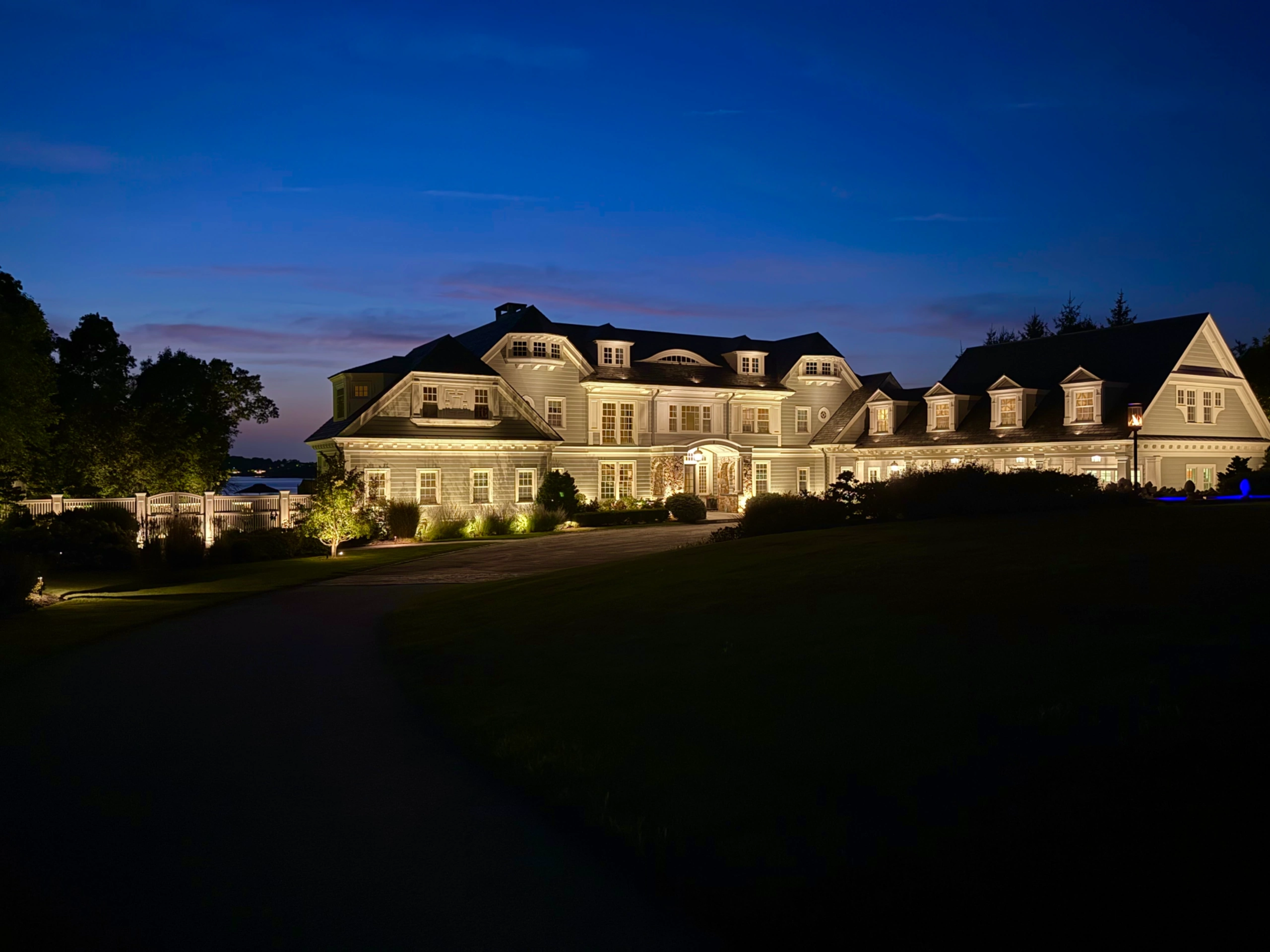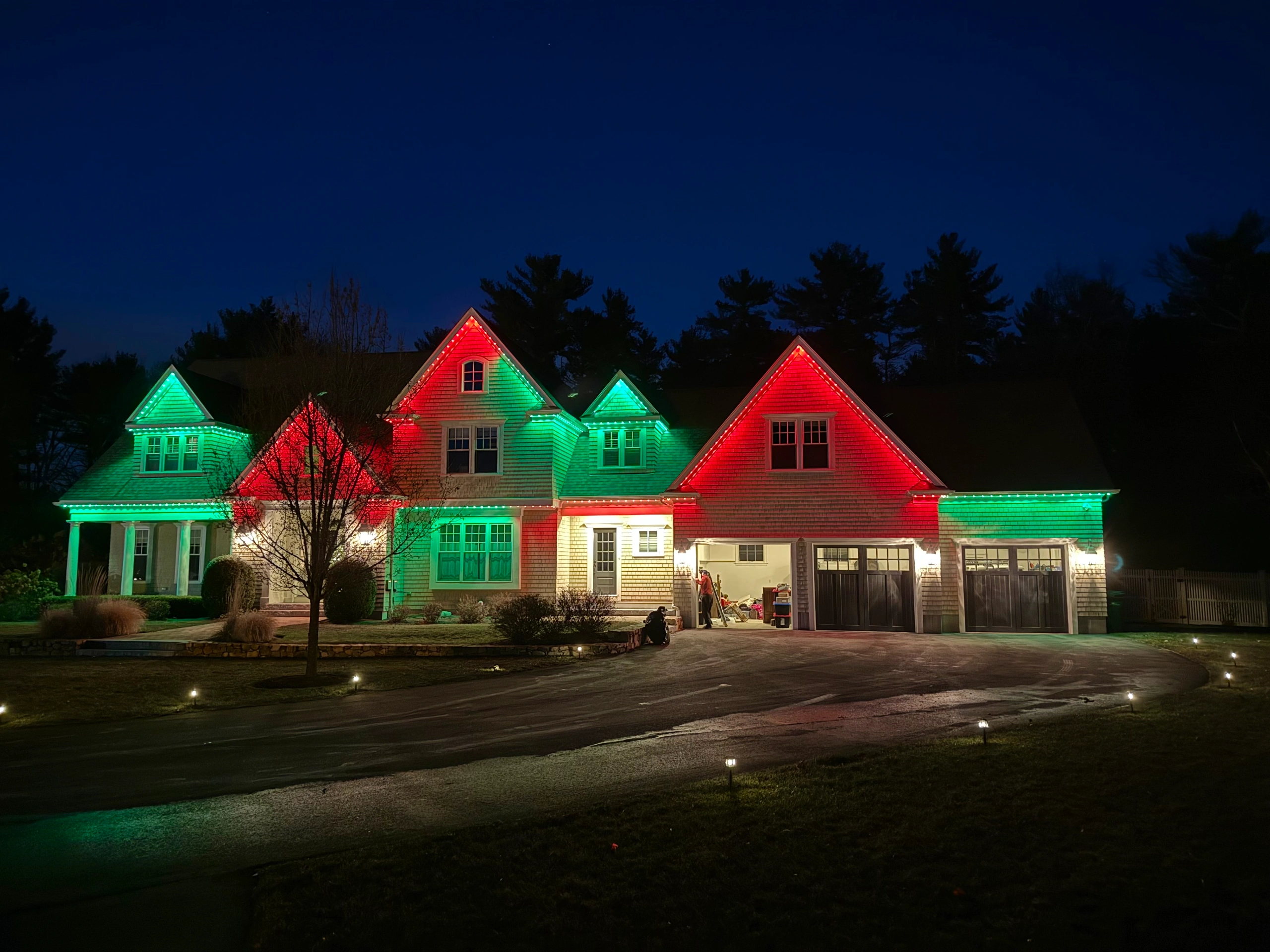
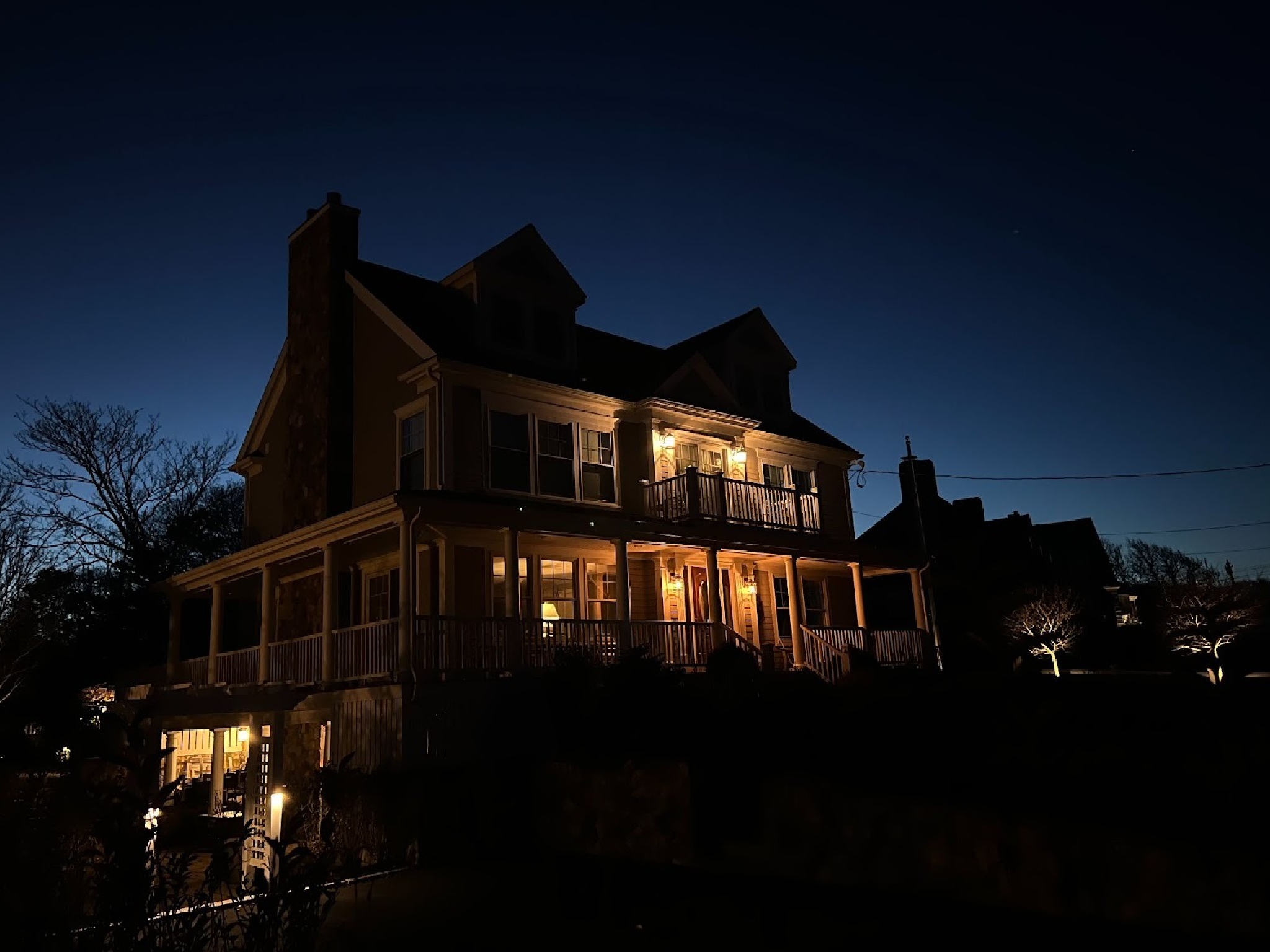
If your outdoor lighting looks dim in winter, it is usually the result of seasonal changes, not a failing system. Homeowners across Massachusetts often notice the shift once nights get longer and landscapes lose their summer structure, even though their lighting still turns on and functions normally.
Winter affects outdoor lighting in more ways than most homeowners expect. Bare trees remove reflective surfaces, snow alters how light spreads across the ground, and colder temperatures can subtly impact low voltage systems. These changes reduce contrast and clarity, making lighting designs that felt balanced in warmer months appear weaker or uneven.
In most cases, fixing dim winter lighting is not about replacing fixtures or installing brighter bulbs. Outdoor lighting that looks dim in winter usually needs seasonal re aiming, cleaning, and system tuning to match how the landscape and light conditions change once temperatures drop.
Below, we explain why outdoor lighting looks dim in winter and what actually helps restore brightness, balance, and visual impact.
Winter Changes How Bright Light Feels, Even If Nothing Is Wrong
One of the most common reasons landscape lighting looks dim in winter has nothing to do with the fixtures themselves. The lighting is often doing exactly what it was designed to do, but the environment around it is no longer the same.
During the warmer months, your outdoor lighting benefits from everything around it. Leaves, grass, mulch, and full landscaping surfaces help reflect and spread light, which makes spaces feel brighter and more complete. Once winter arrives, much of that natural support disappears. Trees lose their leaves, planting beds go dark, and frozen ground absorbs light instead of bouncing it back. The result is lighting that feels flatter and less impactful, even though output levels have not changed. This shift alone can make a well designed system feel underpowered simply because the landscape is no longer helping carry the light.
There is also a human factor at play. Longer nights and darker surroundings change how your eyes read contrast, making unlit areas feel deeper and illuminated areas feel less dominant. That contrast shift is often what makes homeowners think something is wrong when, in reality, winter has changed how the lighting is perceived.
Cold Weather Can Reduce Lighting Performance
Perception plays a role, but winter can also change how landscape lighting systems actually perform. Cold temperatures introduce small technical challenges that become more noticeable once nights are longer and systems run for extended periods.
Low voltage landscape lighting depends on transformers, wiring, and internal drivers that respond to temperature and load. When temperatures drop, systems that were already near their limits may experience reduced efficiency. Over time, repeated freezing and thawing can also affect connections and internal components, leading to performance loss that is subtle but widespread rather than sudden or obvious.
Several winter specific issues commonly contribute to outdoor lighting looking dim:
- Increased voltage drop during long winter nights
- Transformers producing less consistent output in cold conditions
- Condensation forming inside fixtures as temperatures fluctuate
- Moisture or residue dulling lenses and reducing clarity
- Wire connections tightening or loosening during freeze-thaw cycles
This is why outdoor lighting can look dim in winter even when bulbs are still working and nothing appears broken. The system is running, but not at peak efficiency. These technical changes often combine with environmental factors, which sets the stage for the next issue many homeowners overlook: lighting that was aimed for summer landscapes.
Your Lighting Was Aimed for Summer Landscapes
Many winter lighting issues come down to one simple fact: your outdoor lighting was designed for a landscape that no longer looks the same.
Most landscape lighting systems are installed and aimed during warmer months, when the landscape is full and visually active. Trees are covered in leaves, shrubs have shape, and garden beds provide depth and structure that help define where light should land. Those elements influence fixture placement and beam direction more than most homeowners realize. When winter arrives and that structure disappears, the lighting is still aiming where it always has, but the visual targets are gone.
Fixtures that once brought trees and plantings to life may now shine into empty space, while accent lights wash areas that no longer anchor the design. Shadows change, focal points lose definition, and the lighting can start to feel uneven or flat. This is a natural part of keeping an outdoor lighting design refined as the landscape changes throughout the year.
Snow, Ice, and Frozen Ground Cause Hidden Problems
Snow, ice, and frozen ground introduce physical challenges that quietly affect outdoor lighting performance throughout the winter months.
Snow can partially bury fixtures or coat lenses, significantly reducing light output without being obvious at a glance. Ice buildup can block or distort beam angles, causing light to scatter instead of landing where it was intended. At the same time, frozen ground expands and contracts, which can shift fixture alignment just enough to change how light is distributed across the property.
Below the surface, winter conditions can also stress wiring and connections. freeze-thaw cycles create tension in buried lines and connection points, which rarely cause immediate failure but often reduce efficiency. Over time, these small disruptions add up and contribute to outdoor lighting looking dim in winter even though the system still turns on.
Because everything appears to be working, these issues are easy to overlook. The lighting is on, but clarity, balance, and definition are compromised, setting the stage for performance issues that feel subtle yet persistent.
When Brighter Bulbs Are Not the Right Fix
When outdoor lighting starts to feel too dim, many homeowners assume the solution is as simple as installing brighter bulbs. While that sounds logical, it often works against the original lighting design. Well designed landscape lighting is meant to guide the eye, not overpower it. Increasing brightness without adjusting placement or balance usually creates new issues rather than improving the overall look.
Higher wattage bulbs can introduce glare, harsh hotspots, and uneven light distribution that flatten the space instead of enhancing it. They can also strain transformers and disrupt the balance between different lighting zones, especially in low voltage systems. In winter, these issues become more noticeable because shadows are sharper and contrast is higher. What looks brighter at first can quickly feel uncomfortable or unrefined. This is why simply adding brightness rarely restores balance and why adjustments to aiming, spacing, and output are often far more effective than changing bulbs alone.
How Professional Winter Adjustments Restore Balance
Professional winter lighting adjustments are not about making a space brighter. They are about restoring balance, intent, and clarity after seasonal changes have altered how the lighting performs and where it lands.
A proper seasonal lighting service often includes:
- Re-aiming fixtures to account for bare trees and open sightlines
- Cleaning lenses to remove film, moisture residue, and debris
- Resetting fixtures that shifted due to frozen or expanding ground
- Balancing voltage across lighting zones for consistent output
- Inspecting connections for moisture intrusion or wear
These adjustments are subtle, but their impact is immediate. Small changes to beam spread, fixture angles, or light distribution can dramatically improve how welcoming and cohesive your property feels at night. Instead of scattered or faded light, the design regains depth and definition.
Winter outdoor lighting should feel intentional and finished, not dull or incomplete. When seasonal adjustments are handled correctly, your lighting can look just as refined in January as it does in the middle of summer.
Get Your Outdoor Lighting Looking Right This Winter
If your outdoor or landscape lighting looks dim in winter, it is often a sign that seasonal conditions have shifted how your system performs, not that anything needs to be replaced. With the right adjustments, winter lighting can feel balanced, intentional, and visually complete again.
NightView Outdoor Lighting works with homeowners and businesses throughout Massachusetts to fine tune landscape lighting for year round performance. Our experience with New England winters a