If you’ve ever admired a beautifully lit landscape at night and couldn’t quite put your finger on what made it look that way — there’s a good chance the answer was tree lighting. Specifically, it was the technique behind it.
Two approaches define professional outdoor tree lighting: uplighting and downlighting. Both are stunning when done well. But they create completely different effects, suit different tree types, and serve different design goals. Understanding the difference will help you make the right choice for your property — or at least have an informed conversation when you sit down with a lighting designer.
What Is Tree Uplighting?
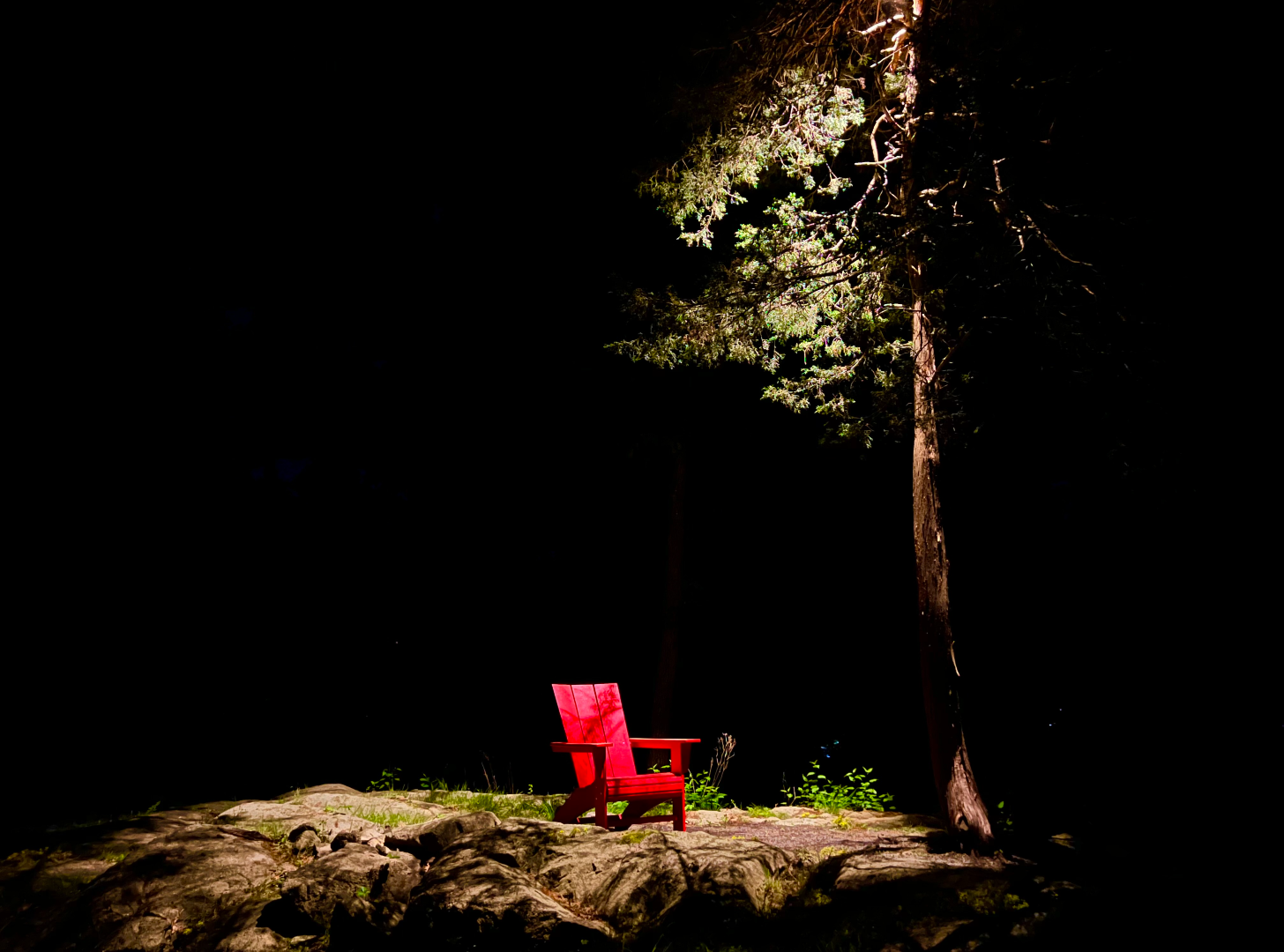
Uplighting positions fixtures at ground level — or slightly recessed below the surface — and directs light upward into the canopy or along the trunk. The effect is immediate and dramatic. Your tree appears to rise out of the darkness, its structure, texture, and branching pattern thrown into sharp relief against the night sky.
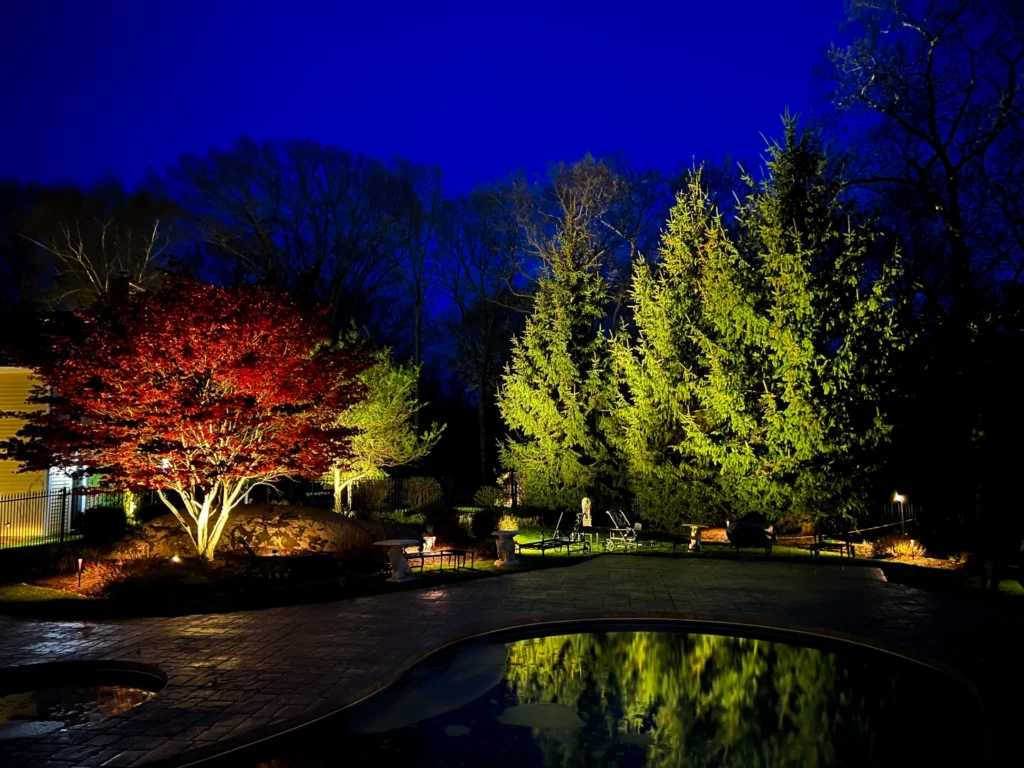
This technique works particularly well on trees with strong architectural form. Tall oaks, maples, and birches — where the branching pattern is part of what makes the tree beautiful — respond exceptionally to uplighting. Ornamental trees like Japanese maples are another natural fit, as the fine branching detail and leaf texture become the focal point rather than the background.
Done well, uplighting gives a tree natural weight and presence in the landscape. Done poorly — with fixtures too close to the trunk, beams too wide, or intensity too high — it can look theatrical. The quality of the light depends almost entirely on the precision of placement and the experience behind it.
What Is Tree Downlighting?
Downlighting takes the opposite approach. Fixtures are mounted high — in the tree canopy, or on an elevated structure above — and directed downward toward the ground. The effect is far more naturalistic: soft, dappled light that closely mimics how moonlight filters through leaves on a clear night.
This is sometimes called moonlighting, and the name is accurate. When it’s executed well, it’s almost indistinguishable from the real thing. Rather than defining the tree, downlighting defines the space beneath it — casting a gentle ambient glow that makes a patio, path, or garden feel warm and inviting rather than dramatically staged.
This makes downlighting the better choice wherever the goal is atmosphere over architecture. Outdoor dining areas, garden paths, and entertaining spaces all benefit from the soft, continuous light that downlighting provides.
Can You Use Both? The Case for Layered Tree Lighting
Yes — and for the right tree, it’s almost always worth it.
The most refined tree lighting designs combine both techniques. The uplight defines the tree’s structure from below. The downlight softens the space beneath it and ties the tree into the broader landscape. Together, they create a tree that looks genuinely alive at night rather than simply illuminated.
This layered approach requires more skill to execute. Fixture placement, beam spread, and intensity all need to be calibrated so the two light sources work together rather than compete. But the result — on a statement tree, anchoring a well-designed property — is the kind of lighting that makes guests ask who designed the landscape.
Which Trees Respond Best to Each Technique
Not every tree suits every technique, and part of a professional consultation is matching the approach to the tree. As a general guide:
Uplighting works well on: oaks, maples, birches, ornamental Japanese maples, crape myrtles, and specimen conifers. The common thread is strong structure — either in the trunk, the branching pattern, or both.
Downlighting works well on: large canopy trees with dense foliage such as maples, lindens, and dogwoods, particularly when they overhang a usable outdoor space. Trees that border pathways or define garden zones are also strong candidates.
Both techniques: most mature specimen trees with strong structure and enough canopy height to justify a mounted fixture. If a tree anchors your entire landscape, it’s almost certainly a candidate for a layered approach.
Why Professional Installation Makes All the Difference
The techniques are straightforward to describe. The execution is where things become technical.
Uplighting requires precise fixture placement — too close to the trunk and the light flares; too far away and the tree reads as flat. The beam angle needs to match the tree’s actual profile, which changes across seasons. The fixture type matters too: intensity that works on a thirty-foot oak will overwhelm a Japanese maple at fifteen feet.
Downlighting, particularly moonlighting, requires mounting fixtures in a live canopy — which means working carefully around branches, managing weight distribution, and selecting mounting methods that won’t damage the tree over time. A lighting designer also needs to account for how the effect changes when the tree loses its leaves in winter.
These are judgment calls built from experience. A professional has made these decisions across hundreds of properties. A DIY installation — even with quality fixtures — rarely achieves the same result, because the technique matters as much as the equipment.
At NightView, every outdoor tree lighting project begins with a site visit and a custom design. We have been designing and installing landscape lighting across the South Shore, Cape Cod, and Greater Boston since 2003. If you have trees worth looking at, we can help you see them properly after dark.
Tree Lighting FAQs
What is the best outdoor lighting technique for a Japanese maple?
Uplighting is almost always the right choice for a Japanese maple. The goal is to highlight the tree’s delicate branching structure and fine leaf texture without overwhelming it. We typically use a narrow-beam fixture at low intensity, placed carefully to preserve the natural quality of the light.
How far from the trunk should uplight fixtures be placed?
As a general guide, fixtures are placed twelve to twenty-four inches from the trunk and angled between thirty and forty-five degrees. For larger trees, we use multiple fixtures positioned around the canopy to light it evenly and avoid flat spots.
Can outdoor tree lighting damage the tree?
Properly installed tree lighting does not harm healthy trees. We use low-heat LED fixtures that generate no meaningful heat at the leaf or bark surface, and we avoid invasive mounting methods that would stress branches or disrupt growth over time.
Is outdoor tree lighting expensive to run?
Modern LED landscape lighting uses very little energy. A typical tree lighting setup adds only a few dollars per month to a standard electricity bill, particularly when paired with smart timers and dimmers — which we include in every installation.
Do you offer tree lighting service near me on the South Shore?
Yes. NightView serves homeowners across Norwell, Hingham, Cohasset, Scituate, Duxbury, Plymouth, and the surrounding South Shore communities, as well as Cape Cod and Greater Boston. Contact us to schedule a free on-site consultation.
Ready to see what your trees look like after dark?
NightView designs and installs custom outdoor tree lighting for homeowners across the South Shore, Cape Cod, and Greater Boston. Contact us to schedule your free consultation.